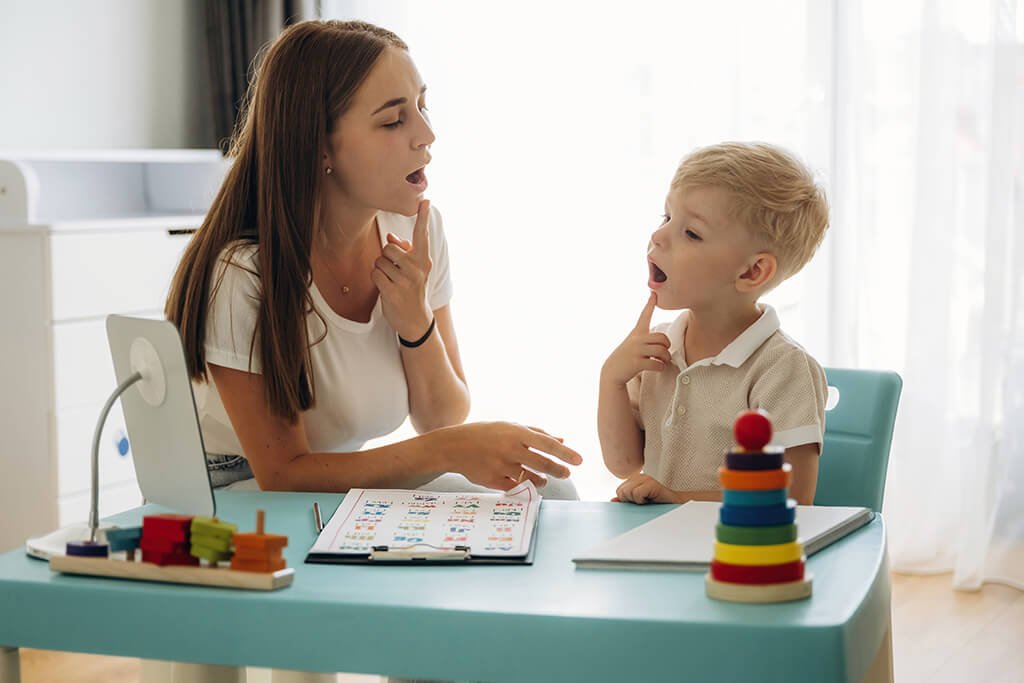
Communication plays a vital role in a child’s confidence and development. Difficulties expressing thoughts and needs had begun affecting everyday interactions, making it challenging to participate in conversations, classroom activities, and social play. Moments of frustration became increasingly common when words could not be communicated clearly.
The family sought early speech therapy support to help strengthen communication skills while creating a positive and encouraging learning environment. The objective was to improve speech clarity, expand vocabulary, and develop the confidence needed to communicate more comfortably in daily life.
Therapy Goals
The program was designed to encourage steady communication development while making each session engaging and enjoyable.
The primary goals included:
- Improve speech clarity and pronunciation
- Expand expressive vocabulary
- Encourage confident communication
- Strengthen listening and comprehension skills
- Increase participation in conversations
- Support communication at home and in educational settings
Personalized Care Plan
Following an initial speech and language assessment, a personalized therapy plan was developed to suit the child’s communication abilities and learning style.
Each session incorporated interactive games, storytelling, picture-based learning, and play-focused activities that encouraged natural communication. Parents were actively involved throughout the program and received practical exercises that could easily be integrated into everyday routines.
Regular progress reviews allowed therapy activities to evolve alongside the child’s development, ensuring every milestone continued building toward greater communication confidence.
Family Reflection
“The progress we’ve seen has been remarkable. Everyday conversations became easier, confidence grew with every session, and communication now feels much more natural. The practical activities provided throughout the program were easy to continue at home and made a real difference in our child’s daily life.”
Therapy Techniques Used
The therapy program combined engaging and evidence-based approaches, including:
- Speech & Language Assessment
- Expressive Language Activities
- Vocabulary Building Exercises
- Articulation Practice
- Listening & Comprehension Activities
- Play-Based Communication Therapy
- Storytelling & Interactive Reading
- Parent Home Practice Guidance
- Progress Monitoring & Goal Reviews
Progress & Results
Steady improvements were observed throughout the program as communication became more natural and confident. Vocabulary expanded, pronunciation became clearer, and conversations gradually required less prompting. Increased confidence also encouraged greater participation in classroom activities and social interactions with family and peers.
By the end of the program, communication had become more spontaneous, allowing ideas, feelings, and everyday needs to be expressed with greater ease.
Key Outcomes
- Improved speech clarity and pronunciation
- Expanded expressive vocabulary
- Greater confidence during conversations
- Better listening and comprehension skills
- Increased participation in classroom activities
- Stronger communication with family members
- Improved social interaction with peers
- Enhanced overall communication confidence